|
|

 |
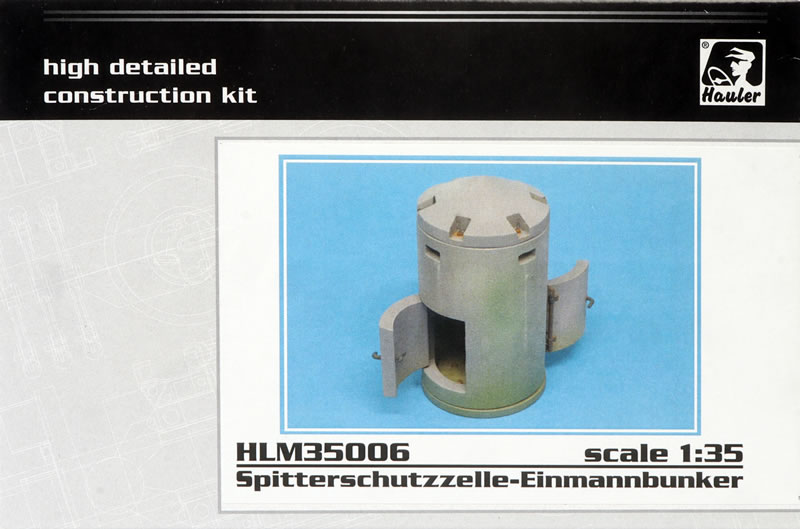
Spitterschutzzelle-Einmannbunker
Brengun, 1/35 scale
Reviewed by Brett Green
Summary
| Stock Number and Description | Hauler Kit No. HLM35006 - Spitterschutzzelle-Einmannbunker |
| Scale: | 1/35 |
| Media and Contents: | Nine parts in grey coloured resin; instructions. |
| Price: | 17.94 Euro plus shipping available online from Hauler and hobby retailers worldwide. |
| Review Type: | First Look |
| Advantages: | High quality resin casting; interesting and inspiring subject; clear instructions. |
| Disadvantages: | None noted. |
| Recommendation: | This is an interesting subject that could be standalone or part of a vignetter or diorama. |

Spitterschutzzelle-Einmannbunker – The One-Man Bunker
Among the more unusual defensive measures employed by Germany during the Second World War was the Spitterschutzzelle-Einmannbunker—literally translated as a “splinter protection cell, one-man bunker.” Compact, starkly utilitarian, and unmistakably austere in appearance, this small prefabricated structure reflected both the increasing vulnerability of the German homeland to air attack and the urgent need for simple, rapidly deployable protection for personnel.
Origins and Requirement
By the early 1940s, the intensification of Allied strategic bombing—particularly by forces such as the Royal Air Force and the United States Army Air Forces—had exposed critical weaknesses in Germany’s civil and military air defence infrastructure. Airfields, industrial plants, rail yards, and command posts were increasingly subjected to strafing and fragmentation effects from bombs exploding nearby.
While large communal bunkers and flak towers provided protection for groups, there remained a need to safeguard isolated personnel: sentries, dispatch riders, railway workers, and airfield ground crew. The solution was a small, individual shelter capable of protecting a single occupant from blast and, more importantly, from flying shrapnel—Splitterschutz.
Design and Construction
The Spitterschutzzelle-Einmannbunker was typically constructed from reinforced concrete, prefabricated for ease of transport and rapid installation. Its most recognisable form was a narrow, upright cylinder or slightly tapered column, often likened to a sentry box or concrete bollard.
Key design features included:
-
Compact Footprint: Usually little more than one metre in diameter, minimising material use and allowing placement in confined or exposed locations.
-
Thick Concrete Walls: Designed to resist fragmentation and small-arms fire rather than direct hits.
-
EntryOpening: A small doorway or hatch, often positioned slightly above ground level to reduce blast ingress.
-
Ventilation Apertures: Limited openings ensured airflow while maintaining protection.
-
Internal Standing Space: The occupant typically stood upright; seating was rare or improvised.
Some variants included a simple internal shelf or bracket for a rifle, and occasionally a periscope or viewing slit, though most offered minimal visibility.
Deployment and Use
These one-man bunkers were deployed widely across the German Reich and occupied territories.
They were particularly common at:
-
Airfields and dispersal areas
-
Railway junctions and marshalling yards
-
Industrial complexes
-
Coastal defence positions
-
Urban areas vulnerable to air raids
Their primary role was to provide immediate, localised protection during sudden air attacks. When sirens sounded or aircraft were spotted, personnel could quickly take shelter inside these nearby structures rather than attempting to reach distant bunkers.
Unlike larger shelters, the Einmannbunker was not intended for prolonged occupancy. Instead, it functioned as a last-ditch refuge during the most dangerous moments of an attack—particularly during low-level strafing runs or the fragmentation phase of nearby explosions.
Effectiveness
In their intended role, the Spitterschutzzelle-Einmannbunker proved reasonably effective. The thick concrete walls offered good protection against:
-
Bomb splinters and debris
-
Small-arms fire from strafing aircraft
-
Shockwaves from nearby detonations
However, they were not designed to withstand direct hits or heavy blast overpressure. Their confined interior could also be uncomfortable and potentially hazardous, especially in prolonged attacks or if ventilation was compromised.
Psychologically, these shelters offered reassurance to exposed personnel, reinforcing discipline and reducing the likelihood of panic during air raids.
Variants and Nomenclature
Several variations of the one-man bunker existed, differing in shape and construction method. Some were cast in a more angular form, while others retained the classic cylindrical profile. The terminology could also vary, with similar structures sometimes referred to as Splitterschutzzelle or simply Einmannbunker.
Another related design was the “Winkel” tower, though this was a much larger, multi-person structure and not directly comparable in function or scale.
Legacy
Today, surviving examples of the Spitterschutzzelle-Einmannbunker can still be found across Europe, often overlooked or repurposed. Their stark, almost sculptural appearance serves as a reminder of the pervasive threat of air attack during the war and the pragmatic measures taken to mitigate it.
In contrast to the grand scale of flak towers or underground bunkers, these small shelters tell a more personal story—of the individual soldier or worker, standing alone in a narrow concrete cell, waiting for the violence overhead to pass.
F i r s t L o o k
Hauler has just released a 1/35 scale resin Spitterschutzzelle-Einmannbunker kit. I am not aware of any other 1/35 scale models of this interesting solo bunker.
However, Hauler does also offer other Spitterschutzzelle-Einmannbunker in 1/87, 1/72 and 1/120 scales.
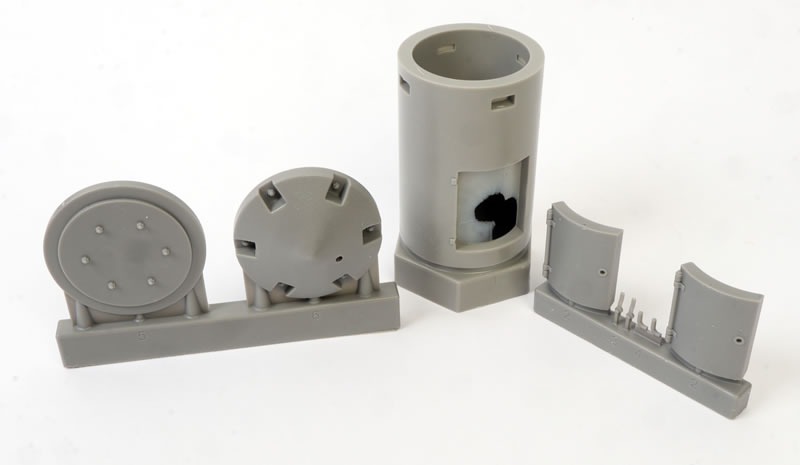
The kit is made up from nine parts in conventionally cast resin and instructions.
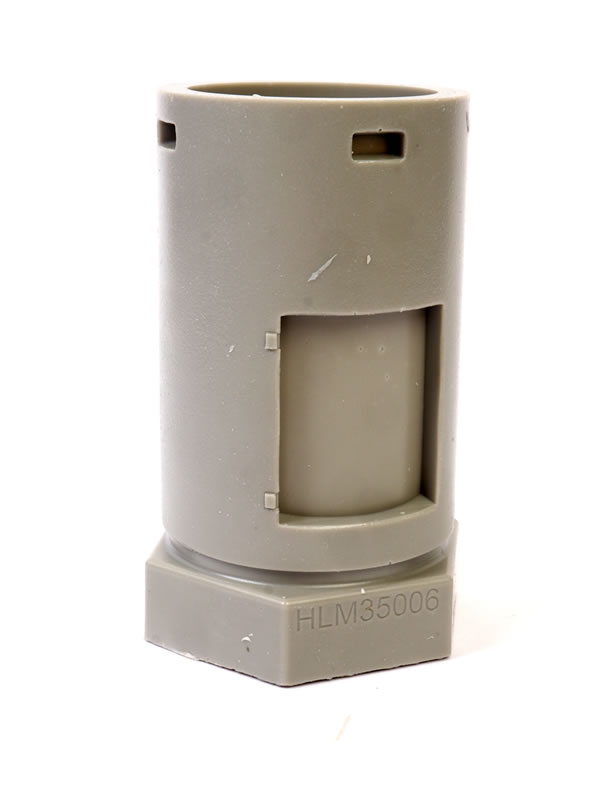
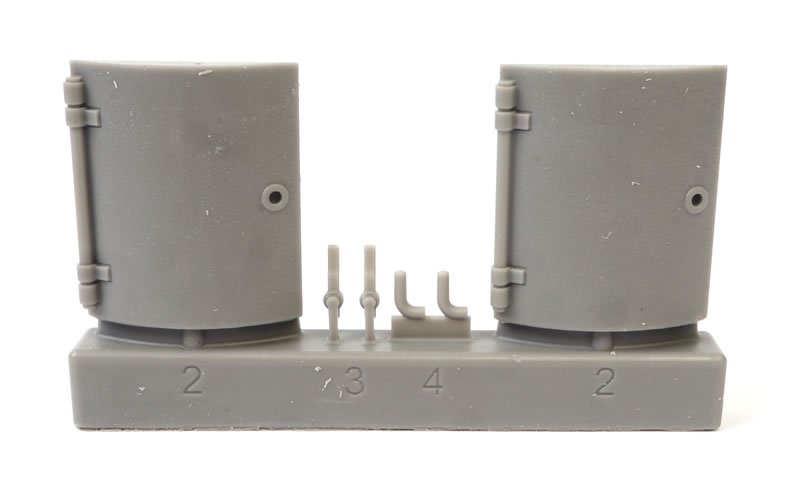
The main part is the cylindrical body. Also included are a base, a roof, two doors that may be posed open or closed and four handles - inside and outside for each door.
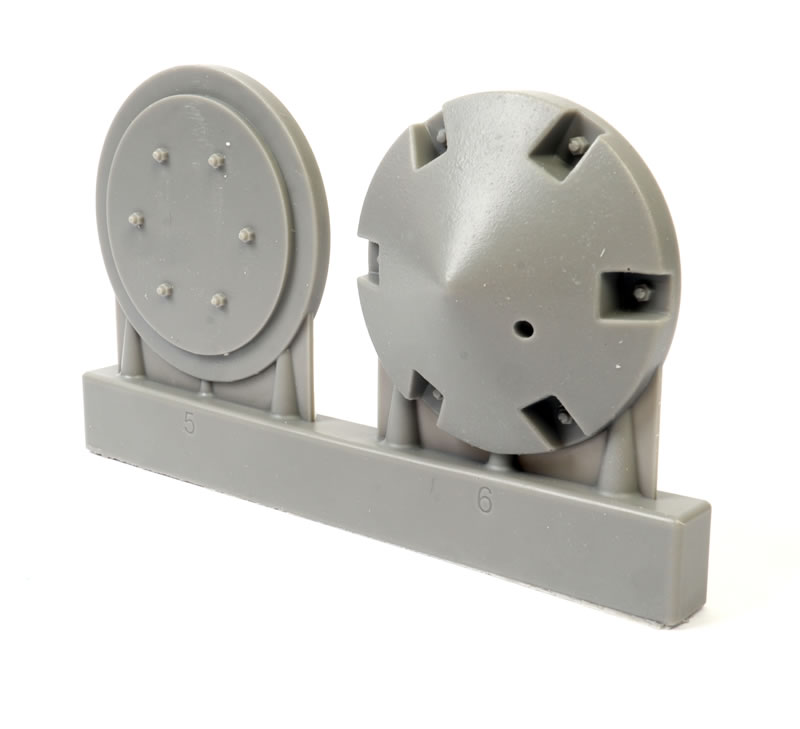
Cleanup will be fast and simple. The handles may be snipped off with a sprue cutter and the larger casting strips / block may be freed with a razor saw or a motor tool - with suitable respiratory protection of course.
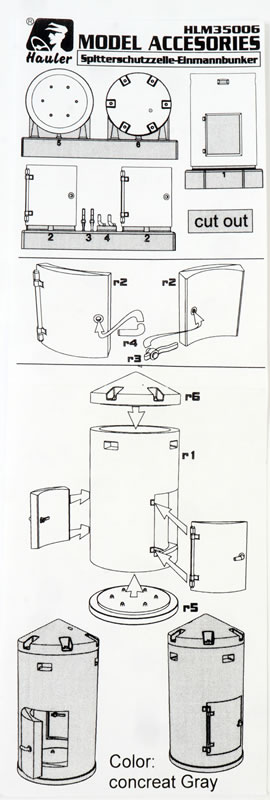
Assembly will be a breeze.
Conclusion
The Spitterschutzzelle-Einmannbunker embodies the essence of wartime expediency: simple, robust, and purpose-built. It was not a weapon, nor a symbol of technological superiority, but rather a quiet acknowledgement of vulnerability—and a practical attempt to preserve life amid the growing intensity of modern aerial warfare.
Like the belly tank racers that would later emerge from discarded aircraft components, these modest structures reflect a broader truth of the Second World War: that innovation was not always grand or glamorous, but often small, utilitarian, and deeply human in its intent.
Brengun's 1/35 scale Spitterschutzzelle-Einmannbunkeris an interesting subject that could be standalone or part of a vignetter or diorama.
Thanks to Brengun for the sample www.brengun.cz
Home
 Discussion Groups
Gallery
Articles
Reviews
Discussion Groups
Gallery
Articles
Reviews
Copyright
Vendors Room
Links
Contact us
Copyright www.missing-lynx.com 2026
Text and Images by
Brett Green
Page Created 11 April, 2026
Page Last Updated
11 April, 2026